BRIGANDINE ABYSS Stats
Command Points and Rally traits beat invented ATK tables.
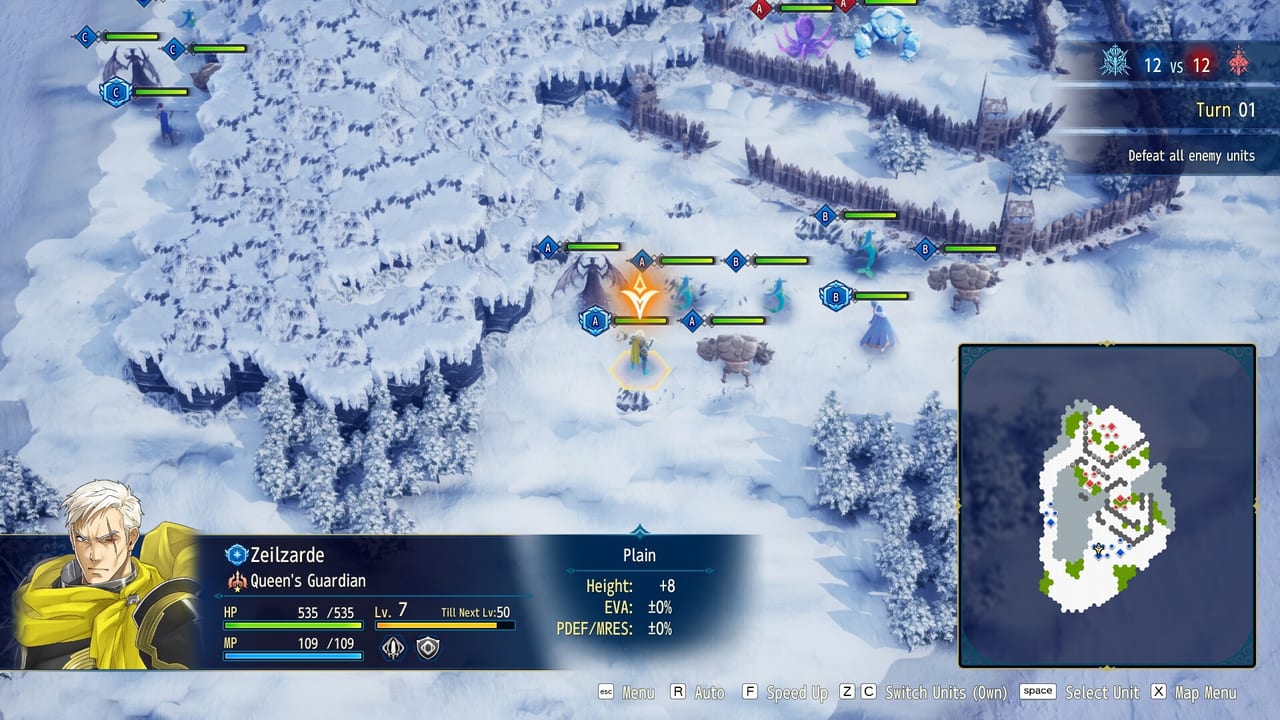
BRIGANDINE ABYSS does not hand reviewers a public spreadsheet of every knight stat name, growth curve, and elemental chart. This page therefore refuses to invent ATK, DEF, and MP tables, Guardian-versus-Berserker growth rates, or a six-element wheel with made-up percentages. What is documented is the set of systems that actually decide whether a squad is legal, whether a spell can fire, and whether a Rally trait is worth the body you pulled off the hex: Command Points, Rally passives, height, zone of control, encirclement, gear from Niffrom’s Market and quests, and the rule that killing a leader forces remaining monsters to retreat.
Treat this as a systems primer that sits next to the Class System guide. For how those systems feel in a fight, use Combat Tips and the Rally guide. For who should carry the numbers, use How to Play.
Command Points are the squad stat
Each leader has a Command Point pool that grows with that leader’s level. Every monster spends a slice of the pool. You may field up to five monsters if the math allows. When a monster class-changes, its cost goes up. That is the closest thing BRIGANDINE ABYSS has to a published “squad power” number: not a hidden rating, but a hard cap you can break by promoting too greedily. A level 20 dragon that prices you out of a fifth body may still be correct on a story special that faces six enemy squads. A cheap fifth body may be correct when you need encirclement bonuses. The Monster Summoning page is where you budget that trade during Organization.
Rally traits are the other published numbers
Rally is a loadout. Absorb one monster, gain its passive, lose it as an independent actor until dismiss. Confirmed trait categories include movement, counter, an element applied to attacks, defense, and extra action. The lizard extra-turn trait—two leader turns in a row—is repeatedly called out as among the strongest. That is a stat in everything but name: it doubles the leader’s output for a round at the cost of a hex body and at the risk of losing the monster if the leader dies while rallied.
Dismiss returns the creature. Some reports say dismiss counts as movement for the purpose of spellcasting. Many classes cannot cast if they already moved. If your “stat plan” is a mage leader with a rallied tank, check whether you can still throw the spell after you pop the tank back onto the field. Accuracy is also a real combat statistic even when this wiki will not fake hit-rate formulas: reviews describe 75 percent swings that still miss, which is why encirclement (more damage, accuracy help, higher crits) and magic (often treated as a cleaner connect) show up in Combat Tips.
Height, flying, and independent movement
Vertical terrain changes attack range and movement. Ground units pay for cliffs and elevation that older Brigandine maps treated more flatly. Flying units ignore some of those restrictions, which is why a flier is a stat investment even if you never see a published MOV column. Monsters can also move independently of their leader and link with other squads. That is a positioning stat: you can park a healer-adjacent creature on a second knight’s line, or send a fast body to finish a wounded leader. Zone of control still stops cheap flanking until the front line dies. Plan Rally movement traits around those rules instead of around a fictional MOV growth table.
Gear, quests, and Niffrom’s Market
Organization is where numbers change without a class-change. Niffrom’s Market sells materials and gear while leaders are home. Quests occupy a leader and pay materials shops do not stock, plus class-change items for the level 20 gate. Stronghold rank adds more local quest and equipment options, described in reviews as improving up to a small cap. None of that requires inventing accessory percentages. It requires scheduling: a plot knight in the market is a plot knight not on a quest; a mercenary on a quest is a mercenary you can afford to lose. Quests and Training is the operational page; this page only states that gear is a real stat vector and that we will not fabricate plus-twenty-five weapon tables.
Combat math this wiki will name
Allied units act, then enemies act. Spells are often free of counter; basic attacks often provoke one. Surrounding a target applies an encirclement debuff with extra damage, accuracy, and crit chance. Killing the enemy leader ends that squad’s remaining monsters via retreat, which is the highest-value “damage” in the game. Losing your own leader while a monster is rallied risks that monster with the squad. After battle, fallen allied monsters can often be resurrected for money, so HP is not a permadeath bar for creatures the way it is for mercenary knights.
Element on attacks exists as a Rally trait and as creature flavor (dragons, unicorns, and the rest listed on Best Monsters). A full Fire-beats-Wind chart is not sourced here. Build around confirmed types and map features—rivers for water-leaning kits, height for fliers—rather than around a fan-made elemental grid.
How to read a unit without a fake spreadsheet
Ask four questions. What does this leader’s Command Point pool still allow after the next monster promotion? Which Rally trait is worth pulling a body off the map? Can this class still cast after a move or a dismiss? Does height or flying matter on the next castle map? Rank the answers on the Class Tier List and Monster Tier List. Pick a campaign on the Faction Overview and Best Faction pages—Scarlet Will or Gran Dragnica first—then let Faction Tier List explain why Mission Mode is a win-condition test, not a stat check.
Frequently Asked Questions
Quick answers to common questions about BRIGANDINE ABYSS.
Where is the ATK DEF MP growth table?
Not published in a complete public source this wiki will copy. We describe Command Points, Rally traits, height, encirclement, and gear instead of inventing numbers.
What is the most important confirmed 'stat' for a squad?
Command Points. They grow with leader level, cap monsters (up to five), and rise when a monster class-changes, which can force you to drop units.
Do Rally traits count as stats?
Yes in practice. Movement, counter, element on attacks, defense, and extra action (including the lizard double turn) are the documented loadout, not flavor text.
Can I change a unit's element with equipment?
No sourced system lets you rewrite a creature's identity that way. Rally can add an element to attacks while a monster is absorbed. Map and type still matter.